How to Layer Anti-Aging Products for Sensitive Skin in the Right Order
If you want to know how to layer skincare without irritating your face, stick to one rule first: apply products from the lightest texture to the heaviest, and put your most active treatments on clean skin before creams seal everything in. For sensitive skin, there’s a second rule that matters just as much: don’t stack too many “results” products at once. That’s where people get into trouble. They buy a handful of anti-aging products, use them all in one routine, and then wonder why their skin is hot, flaky, and angry.
A smart sensitive skin routine order usually looks like this: cleanse, hydrating or soothing layer, treatment, moisturizer, then sunscreen in the morning. At night, sunscreen drops out, of course. The exact treatment step depends on what you’re using. Retinol, peptides, gentle exfoliating acids, and antioxidant serums don’t all behave the same way, and sensitive skin does not reward impatience. If your skin is reactive, the “right order” is not just about product texture. It’s also about choosing which active deserves center stage on a given night, and which ones need to stay in separate routines.
Morning Order: Keep Anti-Aging Simple and Barrier-Friendly
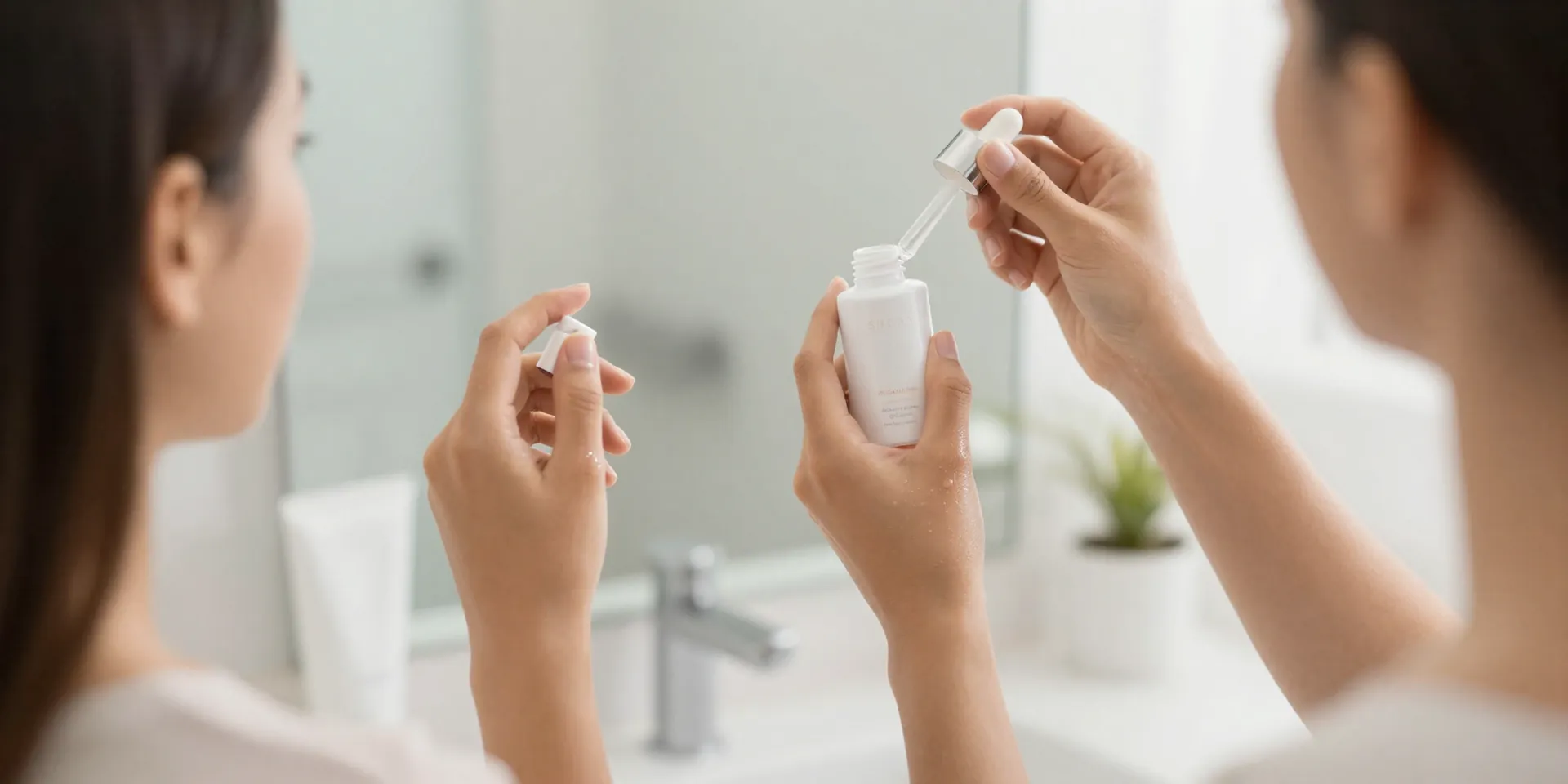
The morning routine should do two things well: protect your skin barrier and defend against daily damage. That means you do not need your most aggressive anti-aging products before breakfast. Actually, for sensitive skin, mornings should be boring in the best possible way. Cleanser if you need it, or just a rinse if your skin is dry and calm. Then a hydrating serum or essence with ingredients like glycerin, hyaluronic acid, panthenol, beta-glucan, or niacinamide if you tolerate it. After that, use a moisturizer to cushion the skin, and finish with broad-spectrum sunscreen.
If you want one anti-aging step in the morning, antioxidants are usually the best fit. Vitamin C can help, but sensitive skin often hates the stronger forms. A gentler derivative or a lower-strength formula may work better than those famous high-acid serums that sting on contact. If vitamin C makes your face light up for all the wrong reasons, skip it. Sunscreen is still the real anti-aging heavy hitter. And yes, it goes last. Not mixed into moisturizer, not layered under face oil, not treated like an optional extra. If your sunscreen pills, the problem is usually too many layers underneath or not enough time between steps.
Night Order: Use One Serious Active, Not a Whole Chemistry Set
Night is where most anti-aging products belong, especially retinoids. A beginner skincare guide for sensitive skin should be very honest here: retinol can be excellent, but it is also the product most likely to be overused. The right order at night is usually cleanse first, then let your skin dry if you’re using retinol, then apply the retinol, then moisturize. Dry skin tends to tolerate retinoids better when they’re not slapped onto a damp face. Damp skin can increase penetration, which sounds efficient until your cheeks start peeling.
If your skin is easily irritated, the “sandwich” method is worth using: a thin layer of moisturizer, then retinol, then another layer of moisturizer. Some people worry this makes retinol useless. It doesn’t. It just slows the hit a little, which is exactly what sensitive skin often needs. If you’re not using retinol that night, your treatment step might be peptides or a very mild exfoliant instead. But not all together. That’s the part people resist. They want maximum results, fast. Sensitive skin wants consistency, restraint, and fewer variables.
Know Which Ingredients Should Not Share the Same Night
The order of skincare matters, but pairing matters more. If you’re layering anti-aging products for sensitive skin, the biggest mistake is combining strong actives as if more automatically means better. Retinol plus a leave-on exfoliating acid in the same routine is often too much. Retinol plus benzoyl peroxide is another common irritation trap. High-strength vitamin C and exfoliating acids can also be rough together, especially if your barrier is already a little shaky. Could some resilient skin types handle it? Sure. Sensitive skin is usually not that skin type.
A better approach is to rotate. One night for retinol. Another night for a mild exfoliant, if you even need one. Another night for recovery only, with hydrating serum and moisturizer. Ceramides, cholesterol, fatty acids, centella, allantoin, colloidal oatmeal, and panthenol play well with almost everything and deserve more attention than they get. They’re not flashy, but they’re the reason your active products remain usable. If your face burns when you apply “gentle” products, that’s your sign to stop chasing extra anti-aging steps and repair your barrier first. No layering trick can outsmart inflamed skin.
Build a Routine You Can Actually Tolerate for Months
The best sensitive skin routine order is the one you can repeat without drama. That usually means fewer products than social media suggests. A solid setup might be: gentle cleanser, hydrating serum, moisturizer, sunscreen in the morning; cleanser, retinol two to three nights a week, moisturizer at night; and on off nights, just hydration plus barrier repair. That’s enough for a lot of people to see smoother texture, better tone, and fewer fine lines over time. Boring? Maybe. Effective? Very often.
Patch testing matters, but so does pacing. Start one new active at a time and give it at least two weeks before introducing another. Otherwise, when your skin reacts, you won’t know what caused it. Also, don’t judge anti-aging products after three uses. Retinoids and peptides need time. What you should notice early is tolerability, not miracles. Less stinging. Less redness. No weird rash around the nose or mouth. Those are wins. If your routine feels like a battle every night, it’s not advanced. It’s just poorly built.
Fix the Most Common Layering Mistakes Before You Buy Anything Else
A lot of routine problems are not caused by the products themselves but by how they’re applied. Using too much is a classic one. You do not need a full dropper of serum or a giant stripe of retinol. More product does not mean more benefit; it usually means more irritation and more pilling. Another mistake is rushing. Give watery products a few seconds to settle before moving on. You don’t need a ten-minute ritual between steps, but immediately rubbing a cream into a still-slippery layer underneath can make everything ball up.
Watch your skin, not just the label. If a product is marketed for sensitive skin but leaves you flushed every time, it’s not for you. If your anti-aging routine makes your skin tighter, shinier, and more reactive, scale back. And if you’re wondering whether you should use exfoliating toner, retinol, peptide serum, vitamin C, and a sleeping mask all in one week as a beginner, probably not. The beginner skincare guide nobody wants to hear is also the one that works: choose a few products, learn their order, give them time, and let your skin stay calm enough to benefit from them.