The Problem With Overstimulating Sleep Audio for Anxiety
Overstimulating sleep audio sounds harmless until you notice what it is actually asking your brain to do. A lot of people with anxiety hit play on a track that promises instant calm, but the audio is packed with shifting music, dramatic binaural effects, whispered cues, chimes, layered ambient textures, or a guided voice that keeps giving the mind fresh material to track. That is not always soothing. Sometimes it is just more input at the exact hour your nervous system needs less.
Here’s the thing: anxious brains are often already scanning. Scanning the body. Scanning the room. Scanning tomorrow. If your bedtime audio keeps introducing new sounds, tonal changes, or verbal prompts every few seconds, your attention stays on duty. You may feel distracted from your worries for a moment, but distraction is not the same as settling. The result can be frustratingly familiar: tired body, alert mind, and a growing suspicion that your “sleep help” is quietly part of the problem.
The Anxiety Triggers Hidden Inside “Relaxing” Tracks
Not all sleep audio is calming, and not all anxiety triggers are obvious. A sudden bell. A whisper too close to the ear. A low-frequency hum that feels eerie instead of grounding. A guided meditation voice that sounds overly intimate or strangely breathy. Even nature audio can backfire if it includes unpredictable thunder, loud bird calls, crashing waves, or looping patterns your brain starts trying to decode. What one person finds comforting, another person experiences as slightly off. Slightly off is enough at 1:00 a.m.
This is where a lot of bedtime meditation mistakes happen. People assume the label tells the truth. “Deep sleep.” “Anxiety relief.” “Instant calm.” But your nervous system does not care about the title. It responds to rhythm, predictability, emotional tone, and how much attention the sound demands. If you notice that a track makes you listen harder, anticipate the next sound, or feel weirdly trapped in your own awareness, that is useful information. It does not mean you are doing relaxation wrong. It means the audio may be too busy, too theatrical, or too emotionally loaded for actual sleep.
Why Guided Audio Can Backfire When Your Mind Is Already Spiraling
Guided sleep content can be excellent, but only when the guidance gets out of the way fast enough. Many tracks don’t. They ask you to breathe in a very specific count, visualize a beach, relax each body part one by one, notice emotions without judgment, imagine light moving through the chest, then return to the breath, then repeat an affirmation. For someone with anxiety, that can turn bedtime into a performance review. Am I breathing right? Why can’t I picture the beach? Why do I still feel my shoulders? Why am I still awake if this is supposed to work?
That is one of the most common bedtime meditation mistakes: choosing a track that creates tasks instead of reducing effort. Anxiety tends to latch onto instructions. It can turn gentle suggestions into pressure. The more steps the audio includes, the more chances there are to feel off-track. Sometimes the better move is less guidance, not more. A short wind-down meditation earlier in the evening may help, but when you are actually trying to fall asleep, a minimal sound bed is often more effective than a voice that keeps reminding you to relax.
What a Better Sleep Sound Usually Has in Common
A better sleep sound is usually boring in the best possible way. Steady. Low-drama. Predictable. It does not ask for interpretation. It does not keep rewarding attention. It gives the brain less to chase. That could be brown noise, soft fan sound, stable rain without thunder, distant ventilation, or a very simple ambient layer with almost no melody and almost no change over time. The exact sound matters less than the stability. For anxious sleepers, consistency is often more calming than beauty.
Notice what is missing there: no sudden volume swings, no spoken guidance once you are trying to drift off, no sparkly high-end sounds, no emotional piano progression, no “cinematic” feeling. A track can be gorgeous and still be a bad sleep tool. The best sleep audio often feels almost plain. You should be able to forget it is there. If you keep noticing the mix, following the melody, waiting for the next phrase, or reacting to the texture, it is probably too stimulating. Better sleep sound supports the background. It does not audition for the lead role.
How to Tell if Your Audio Is Helping or Quietly Making Sleep Harder
You do not need a lab study on your nightstand. You need pattern recognition. If you fall asleep faster without the track than with it, pay attention. If you wake up irritated when the voice comes back in, pay attention. If the audio helps you avoid anxious thoughts for ten minutes but then leaves you more alert, that counts too. People often keep using overstimulating sleep audio because the ritual feels comforting, even when the actual sleep outcome is worse. The routine is soothing; the content is not.
Try a simple test for three to five nights at a time. Keep the volume lower than you think. Switch from guided content to a plain continuous sound. Set a timer so it fades after 30 to 60 minutes if all-night playback feels mentally “sticky.” Avoid earbuds if they make you hyper-aware of your body. If you are tempted to browse endless tracks every night, that search itself may be activating your anxiety. Pick one or two options and stop turning bedtime into an audio shopping session.
Build a Bedtime Sound Setup That Calms Instead of Performs
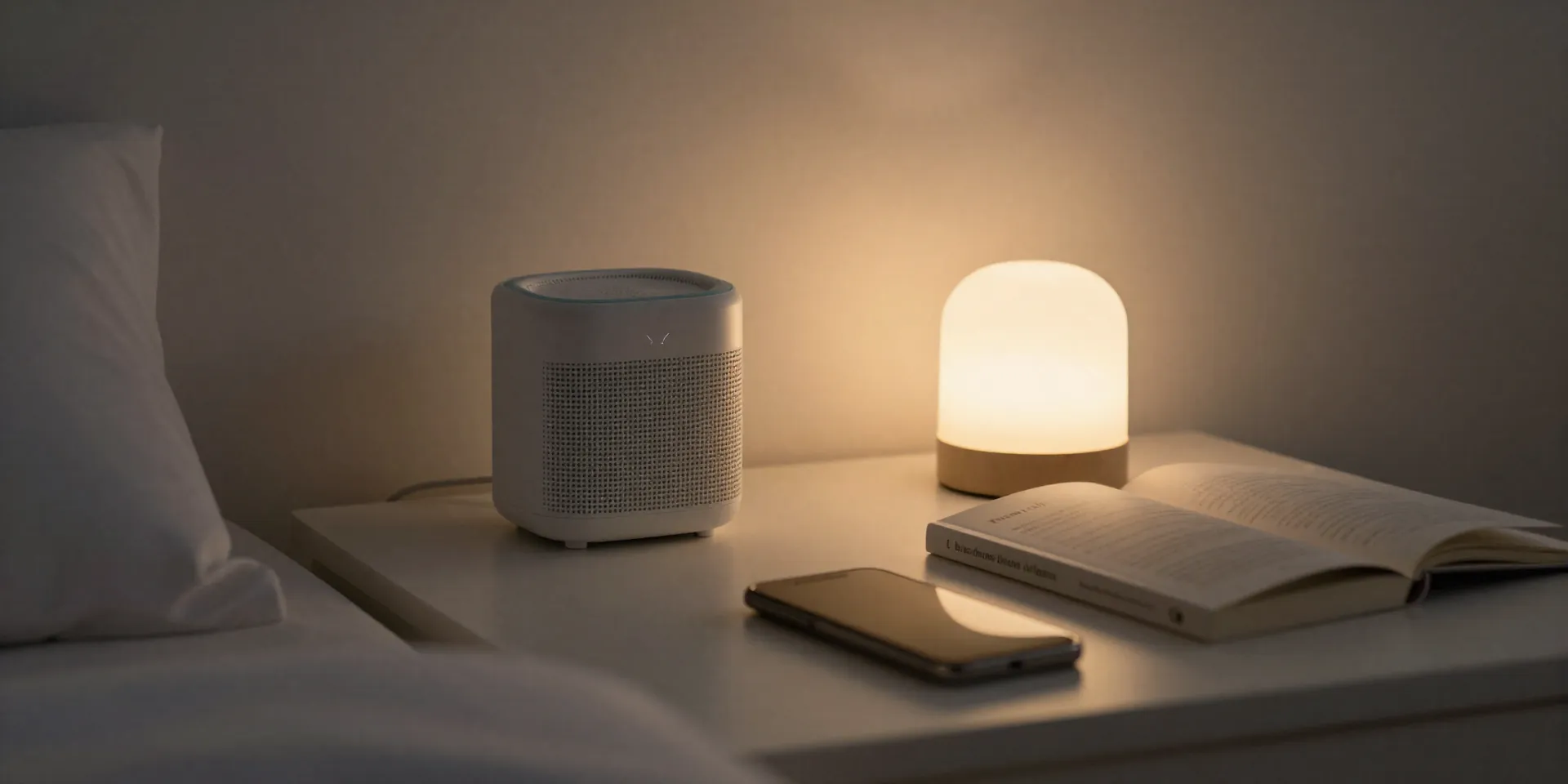
The goal is not to find the most impressive sleep track. It is to reduce friction between being awake and falling asleep. That usually means separating relaxation from sleep. If you like meditation, journaling, breathwork, or a guided anxiety practice, use it earlier as a bridge out of the day. Then, when it is time to sleep, switch to something less interactive. Your brain does not need one more experience. It needs fewer invitations to engage.
Keep the setup plain. One sound source. One reliable track or noise type. Low volume. No lyrics. No surprise transitions. No charismatic host talking to you at midnight like a camp counselor for adults. If your system is sensitive, the most effective fix may feel almost disappointingly simple. But simple works. Especially for anxious sleepers who have spent too long trying to relax with audio that keeps them mentally half-dressed and still on call.